
Root-Knot Nematodes: Every Warm-Weather Gardener's Headache
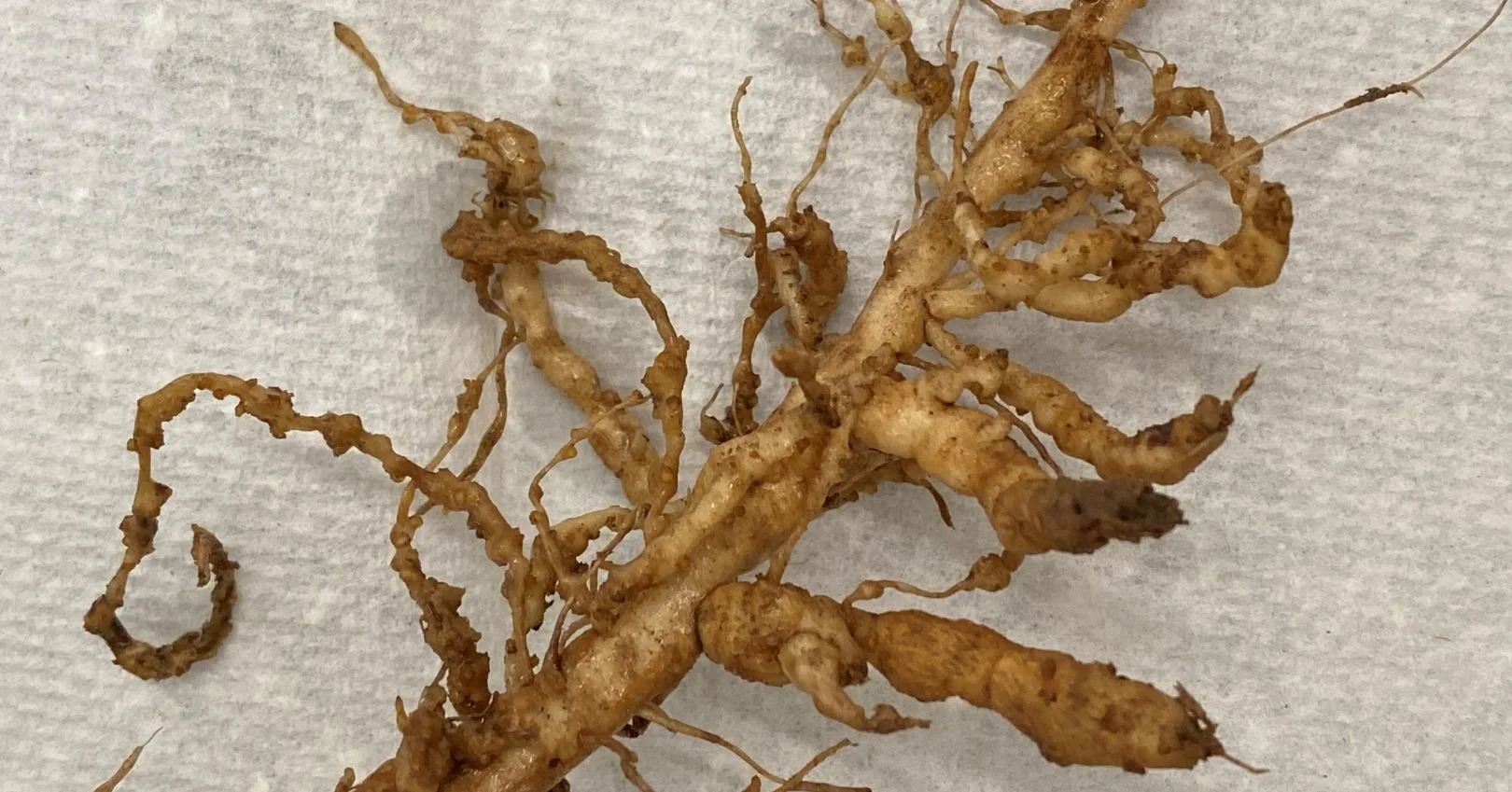
RKN damage. Roots are supposed to be thin like hairs but RKN cause roots to make large bulbous knots.
Few garden problems are as frustrating as root-knot nematodes (RKN). You can water faithfully, fertilize regularly, and give your plants all the love and attention they deserve, only to watch them slowly decline for no obvious reason.
Root-knot nematodes are microscopic parasitic worms that live in the soil and attack plant roots. They burrow into the roots and create swollen galls, or "knots," where they feed and lay their eggs. These damaged roots can no longer efficiently absorb water and nutrients, causing plants to struggle even when growing conditions seem perfect.
How Do You Know You Have Root-Knot Nematodes?
The symptoms often appear gradually and can easily be mistaken for nutrient deficiencies or drought stress.
Plants may:
Produce fewer flowers and fruits
Stop growing or become stunted
Wilt during the heat of the day even when the soil is moist
Develop yellowing leaves
Drop leaves prematurely
Slowly decline despite regular watering and fertilizing
The only way to confirm an infestation is to pull up the plant and inspect the roots. Healthy roots should be fine and fibrous. Roots infected with root-knot nematodes will have swollen knots and galls along them. In severe cases, the roots can become so distorted they resemble the twisted hands of an old fairy-tale witch.
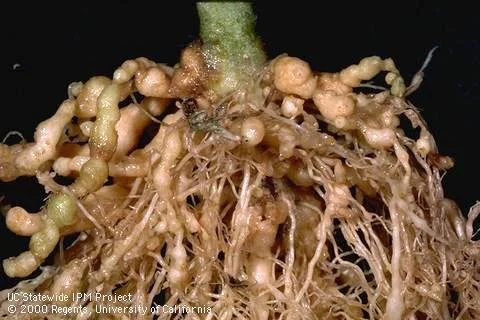
Photo courtesy of University of California IPM Program
Which Plants Are Most Affected?
Unfortunately, root-knot nematodes seem to love many of our favorite summer vegetables, including:
Tomatoes
Cucumbers
Beans
Peppers
Eggplant
Okra
The good news is that they become inactive during cooler weather and generally do not affect winter vegetables. This makes fall and winter gardening a welcome break for gardeners dealing with RKN pressure.
Where Do They Come From?
Root-knot nematodes are incredibly common in warm climates and can find their way into gardens in several ways:
Contaminated garden tools
Nursery transplants
New soil or compost
Soil stuck to shoes or equipment
Moving infected plants from one bed to another
Once established, they can persist in the soil for years, which is why prevention is so important.
The Best Treatment: Build Healthy Soil
Unfortunately, there is no quick cure for root-knot nematodes. The most effective long-term strategy is creating healthy, biologically active soil that supports beneficial organisms that compete with or prey on the harmful nematodes.
Adding compost regularly is one of the best things you can do for your garden. Rich organic matter supports diverse soil life and helps plants better tolerate pest pressure.
Applying Microlife 6-2-4 several times a year can also help build populations of beneficial microorganisms and beneficial nematodes that naturally help keep pest populations in check.
Crab and Shrimp Meal: Nature's Nematode Control
Crab meal and shrimp meal can also be useful tools in managing root-knot nematodes.
These products contain chitin, the same material that makes up the shells of crustaceans. When chitin is added to the soil, it encourages the growth of naturally occurring microbes and fungi that feed on chitin.
As it turns out, root-knot nematode eggs are also made of chitin.
By increasing populations of these beneficial microbes, you're essentially encouraging nature to do some of the pest control work for you. The good guys help reduce the bad guys.
A Final Word
If you've battled root-knot nematodes, you're certainly not alone. They are one of the most common challenges for gardeners in warm climates, especially here along the Gulf Coast.
While they can be discouraging, healthy soil, plenty of organic matter, and encouraging beneficial soil life can dramatically reduce their impact over time. In gardening, the healthiest soil almost always wins in the long run.